

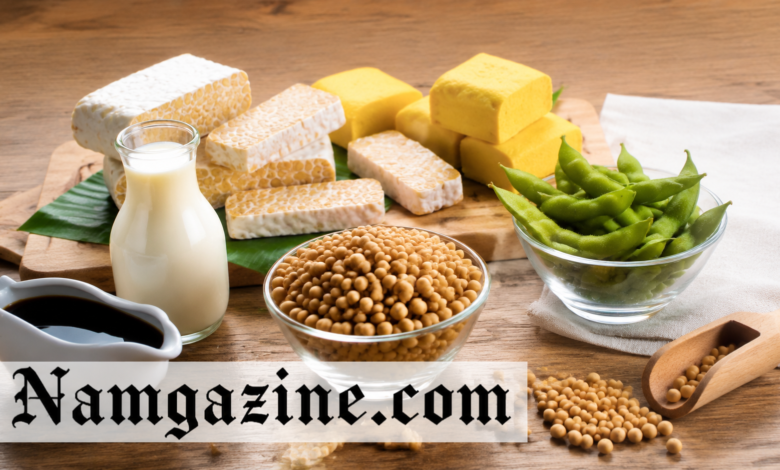
Insoya is a term that has started appearing in online discussions about soy-based foods, plant protein, and modern eating habits. Its growing visibility has prompted questions about what it means, where it comes from, how it relates to traditional soy products, and whether it represents a new food innovation.
The challenge is that Insoya does not appear to have one widely accepted definition in established food and nutrition references. Different online articles use the name for different things, including processed soy protein, soy-based food products, and broader plant-based nutrition concepts. Without a clearly identified manufacturer or standardized formulation, it is difficult to treat every use of the term as referring to the same product.
Understanding Insoya therefore begins with separating the unfamiliar name from the established food behind it: soybeans. Soy has a long history in food preparation and is used to produce familiar foods such as tofu, tempeh, soy milk, and edamame. Exploring these products provides useful context for understanding what Insoya might represent and what consumers should know before accepting claims about its nutrition or benefits.
What Is Insoya?
Insoya is an emerging online term associated with soy-based foods and plant-derived protein. Depending on the website or product description, it may refer to processed soy ingredients, protein-rich foods, or a broader concept connected with modern soy nutrition.
However, the name alone does not establish a specific recipe, manufacturing process, or nutritional profile. A product described as Insoya could be different from another product using the same term, so consumers should not assume that every version contains identical ingredients.
This distinction is important because established soy foods already have recognizable definitions. Tofu is made by coagulating soy milk, while tempeh is traditionally produced through fermentation. Textured soy protein, meanwhile, is processed into a structure that can be used in meat alternatives and other dishes.
For a useful starting point, readers can consult the National Center for Complementary and Integrative Health’s guide to soy. It explains established soy foods and their nutritional context without treating Insoya as a separately established food category.
Where Did Insoya Come From?
The precise origin of the term Insoya is not clearly documented in the reliable sources reviewed for this article. There is no sufficiently verified public record identifying a founder, a first manufacturer, or a specific launch date for one standardized food product under this name.
Its broader context is the development of soy-based foods and plant protein ingredients. Soybeans have been cultivated for centuries, particularly in East Asia, where they became an important ingredient in traditional foods and cooking practices.
Modern food processing has expanded the ways soy can be used. Manufacturers can produce soy flour, protein concentrates, protein isolates, and textured ingredients that work in different recipes, from meat substitutes to packaged snacks and convenient meals.
Insoya appears in online content connected with this wider food landscape, but that does not prove it represents a newly invented ingredient. Until a specific product or manufacturer can be independently identified, claims about its invention or original creator should be treated cautiously.
Why Is Insoya Becoming a Topic of Interest?
One reason for the interest in Insoya is the broader attention being given to plant-based eating. Consumers increasingly encounter products promoted around protein content, meat alternatives, vegetarian cooking, and convenient sources of nutrition.
Soy is relevant to these discussions because it can provide substantial amounts of protein and can be prepared in many different ways. Foods such as tofu, tempeh, edamame, and soy milk already serve a variety of dietary preferences, making soy a familiar ingredient in both traditional and modern food markets.
Search interest in an unfamiliar term can also grow when websites begin publishing explanations of it. However, greater visibility online does not necessarily mean that a new food category has been officially recognized or that a particular product has become widely available.
For that reason, Insoya is best approached as a term worth investigating rather than automatically treating it as a food trend backed by established research. Its actual significance depends on whether it refers to a clearly identifiable product, ingredient, or brand.
What Ingredients Might Be Associated With Insoya?
Because Insoya lacks a consistently established definition, its ingredients cannot be determined from the name alone. Any description of its composition must depend on the specific product or formulation being discussed.
If a product is made primarily from soy protein, its ingredients might include soy protein concentrate, soy protein isolate, textured soy protein, or soy flour. These are recognized soy-derived ingredients, but they are not interchangeable and can have different nutritional characteristics.
A packaged product may also contain other ingredients, including seasonings, vegetable oils, starches, flavorings, sweeteners, or added vitamins and minerals. Their presence depends on the manufacturer’s recipe rather than on the word Insoya itself.
The most reliable approach is to read the ingredient list and nutrition panel. Without a verified product label, claims that all Insoya products are fermented, fortified, organic, or made through a particular process would be premature.
Insoya and Traditional Soy Foods
Traditional soy foods provide a useful comparison because their preparation methods and general characteristics are well established. Although they share a connection to soybeans, their textures, flavors, and uses differ considerably.
Tofu is a versatile ingredient that absorbs surrounding flavors and works in stir-fries, soups, curries, and other dishes. Tempeh is made through fermentation and has a firmer texture, while edamame consists of young soybeans commonly served as a snack or added to salads and rice dishes.
Soy milk is another familiar option, often used as a beverage or in cooking. Textured soy protein is different again: it is commonly rehydrated and seasoned before being used in dishes such as vegetarian mince, fillings, and sauces.
Insoya cannot be compared directly with these foods until its identity and composition are established. If a particular product uses the name, its ingredient list, processing method, and nutritional information will determine which conventional soy food it most closely resembles.
What Is the Nutritional Value of Insoya?
There is no single reliable nutrition profile that can be applied to every product described as Insoya. Protein, calories, carbohydrates, fiber, fat, sodium, and added micronutrients will depend on the ingredients, processing methods, and serving size.
Soy itself is a well-established source of plant protein. According to Harvard T.H. Chan School of Public Health’s Nutrition Source, soy protein is considered complete because it supplies all nine essential amino acids that the body must obtain through food.
Different soy foods nevertheless provide different amounts of nutrients. Whole soybeans contain fiber and fat alongside protein, while some concentrated soy ingredients are designed to provide more protein per serving. Seasonings, sauces, oils, and other additions can also change a prepared food’s overall nutritional profile.
Consumers should therefore avoid relying on a generic claim about Insoya’s protein content or health value. A nutrition label for the actual product is a much stronger basis for evaluating its suitability for a particular diet.
Potential Benefits of Soy-Based Foods
If a product described as Insoya is primarily made from soy, some of its potential nutritional benefits may be similar to those associated with established soy foods. Soy can help people obtain plant protein and may be useful when replacing certain animal protein sources in a balanced eating pattern.
Research has also examined soy’s relationship with cholesterol and other health outcomes. The National Center for Complementary and Integrative Health notes that soy protein may produce a modest reduction in blood cholesterol when it replaces other protein sources, although results vary according to the product and the population studied.
Soy foods can also offer practical advantages in meal planning. Tofu, tempeh, edamame, and textured soy protein can be incorporated into a range of meals, allowing people to vary their protein sources without relying exclusively on meat or dairy products.
These findings should not be interpreted as proof that Insoya has unique health benefits. Any benefit depends on the actual food, its ingredients, how it is prepared, and the broader dietary pattern in which it is consumed.
How Can Insoya Be Used in Everyday Cooking?
The appropriate way to use Insoya depends on the product’s actual form. A powder intended to be mixed into a drink requires different preparation from dried soy chunks, flour, or a ready-to-eat food.
If a product contains textured soy protein, it may be suitable for dishes such as vegetable curries, pasta sauces, stuffed vegetables, or vegetarian versions of familiar meat-based meals. These ingredients often work best when rehydrated and seasoned according to the manufacturer’s instructions.
A soy protein powder, by contrast, may be intended for smoothies or recipes designed to increase protein content. Soy flour may be used in particular baking or cooking applications, although its properties differ from ordinary wheat flour.
Until a specific Insoya product has been identified, these examples should be understood as uses for established soy ingredients rather than confirmed instructions for a standardized Insoya food. Always follow the product’s own preparation guidance.
Is Insoya Safe to Eat?
Safety depends on what the product actually contains, how it was manufactured, and whether it is appropriate for the person consuming it. The name Insoya alone cannot establish that a product is safe, properly labelled, or suitable for every dietary need.
Soy is a common food ingredient, but it can cause allergic reactions in some people. The U.S. Food and Drug Administration’s food allergy guidance identifies soybeans among the major food allergens that must be declared on covered packaged foods in the United States.
Some people may also experience digestive discomfort after consuming soy products. Individuals with known soy allergies should avoid products containing soy, and anyone experiencing symptoms of an allergic reaction should seek appropriate medical advice. Severe reactions, including difficulty breathing or swelling of the throat, require emergency medical attention.
Consumers should also be cautious about unverified claims that a product improves digestion, balances hormones, prevents disease, or provides particular vitamins. Those claims require product-specific evidence and should not be accepted simply because the product is described as natural or plant-based.
How to Choose an Insoya Product
Before purchasing a product labelled Insoya, first confirm that it comes from an identifiable manufacturer. Look for the company’s name, contact details, product description, and clear information about what is being sold.
Next, examine the ingredients and nutrition information. Check protein per serving, added sugar, sodium, fats, and any added nutrients, while also considering serving size and preparation requirements.
Storage instructions, expiry dates, packaging integrity, and allergen declarations are equally important. A product that lacks basic labelling or makes sweeping health claims without evidence deserves additional scrutiny.
Finally, compare it with familiar alternatives such as tofu, tempeh, edamame, or textured soy protein. These established foods provide useful reference points for evaluating ingredients and nutritional value without relying on an unfamiliar name alone.
What Does the Future Hold for Insoya?
The future of Insoya depends on what the term ultimately represents. If it refers to a specific commercial product, its development will depend on the manufacturer’s formulation, quality standards, availability, and ability to communicate what makes it different from existing soy foods.
If it continues to be used as a broad online term, its meaning may remain inconsistent. A clearer definition would require more reliable information about the product or ingredient, including its manufacturing process and nutritional characteristics.
The wider market for plant-based foods provides a relevant context. Soy already plays an important role in vegetarian cooking, meat alternatives, and protein-rich foods, so new products may build on established ingredients rather than introduce an entirely new food category.
For consumers and researchers, the most useful question is not whether Insoya sounds innovative, but whether a particular product offers identifiable ingredients, transparent nutrition information, and a genuine practical advantage. Those details matter far more than a name alone.
Conclusion
Insoya is an emerging term associated online with soy-based foods and plant-derived protein, but its exact meaning remains unclear. Available descriptions are inconsistent, and there is not enough reliable evidence to assign the term one universal recipe, manufacturing process, or nutritional profile.
Soy itself is well established as a source of complete plant protein and an ingredient in many familiar foods. Tofu, tempeh, soy milk, edamame, and textured soy protein offer clear examples of how soy can be used in everyday cooking and balanced diets.
Anyone researching or considering an Insoya product should focus on its manufacturer, ingredients, nutrition label, and safety information. Until its identity is clearly established, the most responsible approach is to separate verified facts about soy from claims made specifically about the name Insoya.
FAQ’s
What is Insoya?
Insoya is a term appearing in online discussions about soy-based foods and plant protein. Its exact meaning is not consistently established, so the ingredients and identity of any specific product need to be verified.
Is Insoya a real food product or a brand?
The available sources do not establish one universally recognized product or brand with a standardized definition. A particular manufacturer may use the name, but that would need to be verified independently.
Is Insoya the same as soya chunks?
Not necessarily. Soya chunks are a recognized form of textured soy protein, while Insoya is used inconsistently online. The product’s label is needed to determine whether the two are equivalent.
What are the nutritional benefits of Insoya?
Its nutritional value cannot be determined from the name alone. If a particular product is primarily made from soy, it may provide plant protein, but its actual nutrient content depends on the formulation and serving size.
Is Insoya a complete protein?
Soy protein is considered complete because it contains all nine essential amino acids. Whether a particular Insoya product provides substantial amounts of soy protein depends on its ingredients.
Can Insoya help with a vegetarian or vegan diet?
A verified soy-based product may fit into a vegetarian or vegan diet if its ingredients are suitable. Check the full ingredient list, because a product’s name does not establish that every ingredient is plant-derived.
Does Insoya contain vitamin B12?
There is no universal nutrition profile establishing that all products called Insoya contain vitamin B12. Unfortified soy is not a reliable source of this vitamin; a specific product’s label must confirm whether B12 has been added.
Are there any safety concerns with Insoya?
Potential concerns depend on the actual ingredients. Soy can cause allergic reactions in susceptible individuals, and consumers should check allergen statements, preparation instructions, and product quality.
How should Insoya be prepared?
Preparation depends on the product’s form. Textured soy protein, soy flour, and protein powders require different uses, so follow the manufacturer’s directions rather than assuming one method works for every product.
Is Insoya healthier than tofu or tempeh?
There is insufficient evidence to make a general comparison. Tofu and tempeh are established foods with recognizable preparation methods, while an Insoya product must be evaluated using its specific ingredients and nutrition information.
